
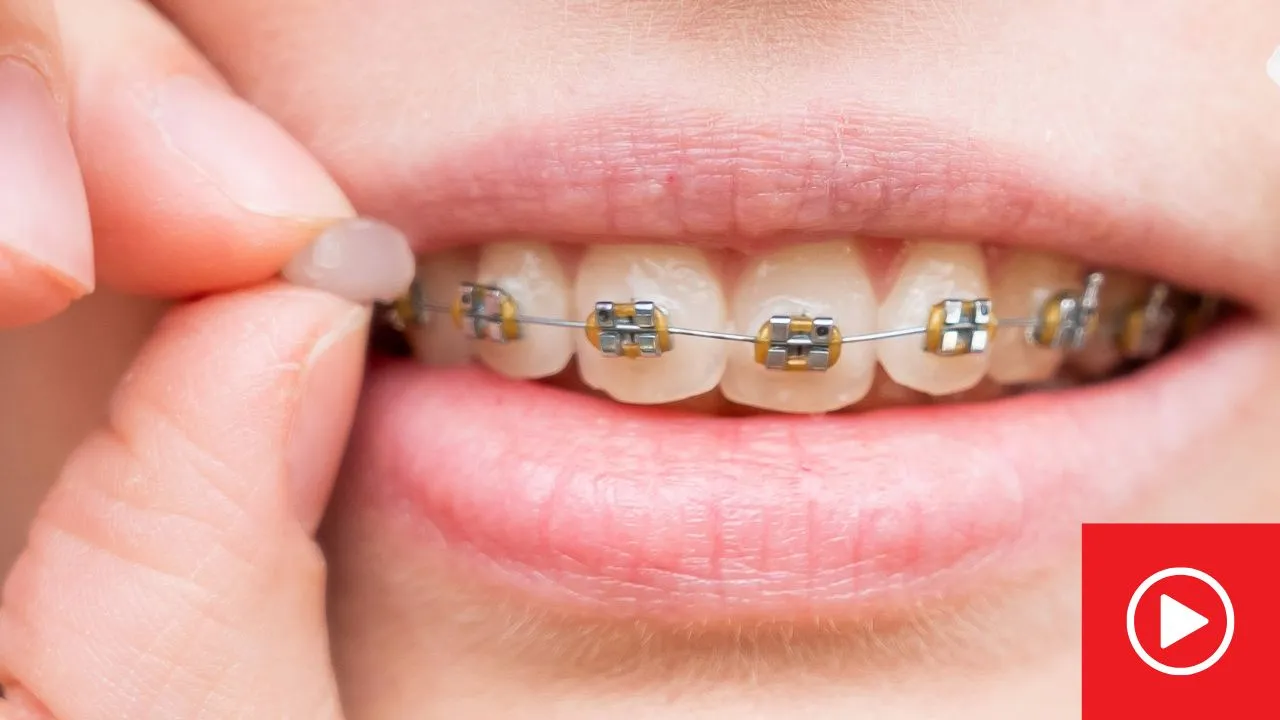
What Are Damon Braces and Self-Ligating Systems?
Self-ligating braces use a specialized bracket with a built-in slide mechanism that holds the archwire in place without elastic ties. The design allows teeth to move more freely with lighter, gentler forces. The Damon System, created by Ormco, is the most recognized self-ligating brand and has reshaped how board-certified orthodontists approach tooth movement. Available for over two decades, the Damon System remains one of the most trusted names in modern orthodontics.
What sets self-ligating brackets apart is how they secure the wire. Traditional braces use small rubber bands (called ligatures) wrapped around each bracket. Self-ligating brackets have a small door or clip that opens and closes to hold the wire. That simple design difference makes a real impact on how treatment feels and progresses.
Two types of self-ligation exist: passive and active. Passive self-ligating systems, like Damon braces, allow the wire to slide freely through the bracket. Active systems apply more pressure to the wire. Most orthodontists prefer passive systems for the early stages of treatment because they create less friction. Passive self-ligating brackets are specifically designed to reduce friction compared to traditional brackets, which contributes to more efficient tooth movement.
The Damon product family includes several options:
- Damon Ultima, the newest generation with enhanced precision
- Damon Q2, a popular metal bracket known for comfort and efficiency
- Damon Clear 2, ceramic brackets that blend with your teeth for a more discreet look
Self-ligating technology continues to evolve, and board-certified orthodontists who stay current with these advances can tailor treatment to each patient’s specific needs. Teens and adults alike benefit from understanding how this bracket system works before making a decision about their smile.
How Do Self-Ligating Braces Work?
Self-ligating braces use a low-friction slide mechanism and shape-memory wires to move teeth with lighter, gentler forces than traditional braces. Instead of tying the wire tightly to each bracket, the wire rests loosely inside a channel. A small door clicks shut to keep it in place, and the wire moves freely as your teeth shift.
Why does that matter? Less friction means your teeth can respond to lighter forces. Think of it like the difference between dragging a heavy box across carpet versus sliding it on a smooth floor. Your teeth move more naturally when there’s less resistance.
Self-ligating braces also use high-technology shape-memory archwires. These wires gradually return to their original shape over time, gently guiding your teeth into better alignment. The combination of low-friction brackets and advanced wires creates steady, consistent movement.
Here’s how a typical treatment process looks from start to finish:
- Free consult: Your orthodontist examines your teeth, takes records, and discusses your goals. You’ll learn whether Damon braces are a good match for your needs.
- Bonding visit: Brackets are attached to your teeth and the first archwire is placed. Most patients describe this step as comfortable, though it can feel a little unusual at first.
- Adjustment visits: You return periodically to have wires changed and progress checked. Because self-ligating brackets don’t rely on elastic ties, these visits tend to be quicker.
- Retention phase: After braces come off, you wear retainers to maintain your new smile.
One thing patients appreciate: fewer trips to the office. Without elastic ties that need replacing every few weeks, adjustment visits can be spaced further apart. Many patients with self-ligating braces visit every 8 to 10 weeks rather than every 4 to 6 weeks.
Key Benefits of Damon Braces Over Traditional Braces
Choosing Damon braces comes with several advantages that make the treatment experience more comfortable and convenient. Here’s a closer look at what patients notice most.
How Do Damon Braces Reduce Office Visits?
Since there are no elastic ligatures to change, visits focus on wire adjustments and progress checks. Most patients come in every 8 to 10 weeks, compared to every 4 to 6 weeks with traditional braces. Over the course of a full treatment, that can add up to several fewer visits overall.
Why Are Self-Ligating Braces More Comfortable?
The lighter forces used with self-ligating systems tend to cause less pressure on your teeth. Many patients report that the initial soreness after adjustments feels more manageable compared to traditional braces. The bracket design itself is also smaller and smoother, which means less irritation against the cheeks and lips.
Is Oral Hygiene Easier with Damon Braces?
Elastic ties are notorious for trapping food particles and plaque. Without them, brushing and flossing around your brackets becomes simpler. Your teeth stay cleaner throughout treatment, which can reduce the risk of white spots or cavities that sometimes develop during orthodontic care.
Potentially Shorter Treatment Time
For many cases, the efficient tooth movement with self-ligating braces can reduce overall treatment length. Every smile is different, so your orthodontist will give you a personalized timeline during your free consult.
Aesthetic options are available, too. If you prefer a more discreet look, Damon Clear 2 ceramic brackets offer a subtle alternative. The clear material blends with your natural tooth color while still delivering the benefits of self-ligation.
Busy teens and working adults both benefit from fewer visits and a more comfortable bracket design. Self-ligating technology simplifies the entire process from bonding day through the final retainer fitting.
Damon Braces vs. Traditional Braces vs. Clear Aligners
Wondering which orthodontic option is right for you? Here’s how Damon self-ligating braces and self-ligating systems stack up against traditional braces and clear aligners.
| Feature | Damon Braces | Traditional Braces | Clear Aligners |
|---|---|---|---|
| Comfort | Lighter forces, less friction | Standard forces with elastic ties | Smooth plastic, removable |
| Visit Frequency | Every 8 to 10 weeks | Every 4 to 6 weeks | Every 6 to 8 weeks |
| Aesthetics | Metal or clear ceramic options | Metal or ceramic with visible ties | Nearly invisible |
| Treatment Time | Often comparable or shorter | Standard timeline | Varies by case complexity |
| Oral Hygiene | Easier without elastics | Elastics trap debris | Removable for brushing |
| Case Complexity | Handles most cases well | Handles all case types | Best for mild to moderate cases |
Traditional braces have been the gold standard for decades. They work well for virtually any orthodontic issue. However, the elastic ties require more frequent adjustments and can make cleaning your teeth trickier. For patients with severe or complex bite issues, traditional braces remain a reliable and effective option.
Damon braces offer many of the same capabilities as traditional braces with added comfort and convenience. The Damon Clear option bridges the gap between metal braces and aligners for patients who want something less noticeable. Many patients find that the reduced friction and fewer visits make a noticeable difference in their day-to-day experience.
Clear aligners are popular for their nearly invisible appearance and removable design. They work beautifully for mild to moderate crowding, spacing, and bite issues. More complex cases may still benefit from the precise control that brackets and wires provide. Aligners also require discipline, since they need to be worn 20 to 22 hours per day for best results.
The best choice depends on your specific needs, lifestyle, and goals. A board-certified orthodontist can evaluate your bite, review your dental records, and recommend the option that makes the most sense for your situation. During a free consult, you can ask questions about each approach and see which one feels right.
How Much Do Damon Braces Affect Your Pricing? Factors That Matter
Damon braces typically fall in the same price range as traditional braces, with final fees depending on case complexity, treatment length, bracket type, insurance coverage, and geographic location. Many families are surprised to learn that self-ligating braces don’t necessarily carry a premium over conventional options.
Factors that affect your total fees:
- Case complexity: More significant crowding, spacing, or bite issues may require longer treatment and additional visits
- Treatment length: The number of months you wear braces impacts overall pricing
- Bracket type: Damon Clear ceramic brackets typically run higher than metal Damon brackets
- Insurance coverage: Many dental plans include orthodontic benefits that help offset your fees
- Geographic location: Fees can vary by region and practice
- Retention needs: Some treatment plans include retainers in the total fee, while others price them separately
Flexible payment plans are common at most orthodontic practices, making it easier for families to plan for treatment over time. Many offices also work directly with your insurance to maximize your benefits and reduce what you pay out of pocket.
The best way to get an accurate estimate is to schedule a free consult. An orthodontist will examine your teeth, discuss your options, and provide a clear breakdown of fees. You can also explore online payment calculators to start getting a sense of what works for your family before your first visit.
Who Is a Good Candidate for Damon Braces?
Self-ligating braces work well for many different patients. Kids, teens, and adults can all benefit from this technology.
Common orthodontic issues treated with Damon braces:
- Crowding (teeth that overlap or are rotated)
- Spacing (gaps between teeth)
- Overbite (upper teeth extend too far over lower teeth)
- Underbite (lower teeth sit in front of upper teeth)
- Crossbite (some upper teeth sit inside lower teeth)
- Open bite (front teeth don’t meet when biting down)
Age isn’t a limiting factor for braces. What matters more is your overall oral health and bone condition. Adults in their 30s, 40s, 50s, and beyond successfully straighten their teeth every day.
You might be an especially good candidate for self-ligating braces if you:
- Want fewer visits due to a busy schedule
- Prefer easier maintenance during treatment
- Have concerns about comfort and soreness
- Are looking for a potentially shorter treatment timeline
Some patients worry about whether they’ll need teeth extracted to address crowding. While every case is unique, the gentle forces and efficient movement with Damon braces can sometimes reduce the need for extractions. Your orthodontist will discuss all options during your evaluation.
A board-certified, AAO-member orthodontist can evaluate your specific needs and recommend the best approach. Whether you’re considering braces for yourself or for your child, a thorough evaluation is the first step toward a smile you’re proud of.
Frequently Asked Questions About Damon Braces
Do Damon braces hurt less than traditional braces?
Many patients report that Damon braces feel more comfortable than traditional braces. The lighter forces and reduced friction put less pressure on your teeth during movement. You’ll still experience some soreness after adjustments, which is normal with any braces, but it tends to be more manageable. Over-the-counter relievers and soft foods help during the first few days.
How long does treatment with Damon braces take?
Treatment length depends on your specific orthodontic needs. Most patients wear Damon braces for 12 to 24 months, similar to traditional braces, though some cases finish sooner and more complex situations may take longer. Your orthodontist will give you a personalized estimate after examining your teeth and creating your treatment plan.
Are Damon Clear braces truly invisible?
Damon Clear brackets are made from a transparent ceramic material that blends with your natural tooth color. They’re much less noticeable than metal brackets, especially from a conversational distance. However, they’re not completely invisible, as the archwire and small bracket components are still visible up close. For patients who want discretion without going fully clear, Damon Clear offers a nice middle ground.
Can self-ligating braces treat severe crowding without extractions?
In many cases, yes. The efficient tooth movement with self-ligating braces can create space by gently expanding the arch and aligning teeth, helping many patients avoid extractions. However, some severe crowding cases may still benefit from removing a tooth or two. Your orthodontist will recommend the approach that gives you a healthy, stable smile.
How often do I need adjustment visits with Damon braces?
Most patients with Damon braces visit the office every 8 to 10 weeks for adjustments. That’s less frequent than traditional braces, which typically require visits every 4 to 6 weeks. The self-ligating design eliminates the need to change elastic ties at each visit, so fewer visits mean less time away from your regular activities.